


Reviewed by the Marketing Team Last updated
Taking prescription drugs does not have to interfere with your rights! Many Minnesotans take prescription medications for legitimate medical reasons.
But what some don’t realize is that driving while under the influence of prescribed drugs, even those taken exactly as directed, can still lead to a DWI (Driving While Impaired) charge. Minnesota’s DWI laws don’t just apply to alcohol; they also cover controlled substances and certain medications that affect your ability to drive safely.
If you take prescription medication and drive regularly, here’s what you should know about how Minnesota law treats prescription-related DWIs, what the prosecution must prove, and the defenses that may apply.
Don’t let this change your life; contact a DWI lawyer today.
Can you get a DWI for prescription drugs in Minnesota?
Yes. Under Minn. Stat. § 169A.20, it is illegal to drive while:
- Under the influence of alcohol,
- Under the influence of a controlled substance, or
- Under the influence of any substance that impairs your ability to drive safely.
That last category is broad: it includes legal prescription drugs, over-the-counter medications, and even medical marijuana if they cause impairment.
So, even if you have a valid prescription, you can still be charged with DWI if the medication affects your ability to operate a vehicle safely.
Here is the list of all the drugs in MN that are known to affect a driver’s reaction time and that the law takes seriously when determining DWI cases.
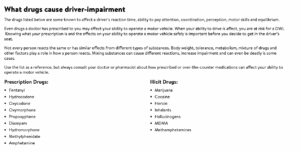
Common prescription drugs linked to DWI arrests
Some medications can slow your reflexes, affect judgment, or cause drowsiness. Common examples include:
- Opioid painkillers (e.g., OxyContin, Vicodin)
- Benzodiazepines (e.g., Xanax, Valium, Ativan)
- Sleep aids (e.g., Ambien, Lunesta)
- ADHD medications (e.g., Adderall, Ritalin)
- Anxiety or antidepressant medications (in high doses or combined with alcohol)
Even legally prescribed drugs can impair you, especially if taken with alcohol or other substances.
How police and prosecutors prove impairment
Unlike alcohol DWIs, there’s no “legal limit” for prescription drugs. Instead, prosecutors must show:
- You were operating or in control of a motor vehicle, and
- You were impaired by the medication at the time.
Evidence may include:
- Field sobriety tests
- Blood or urine test results
- Officer observations (slurred speech, drowsiness, slow reaction times)
- Expert testimony about how the drug affects motor skills
Therapeutic use vs. impairment
Having a prescription is not a complete defense, but it matters. If you were taking medication exactly as prescribed and were not impaired, your attorney can argue that you were in therapeutic use, not intoxicated.
Minnesota courts recognize that lawful use of medication is not automatically illegal. The key issue is impairment, not merely presence of the substance.
Penalties for prescription-related DWIs
Penalties are generally the same as alcohol-based DWIs:
- First offense: Misdemeanor, up to 90 days in jail, $1,000 fine, and license suspension
- Aggravated or repeat offenses: Possible felony charges, longer jail terms, license revocation, and mandatory ignition interlock
- Collateral consequences: Increased insurance rates, employment issues, and criminal record
Because these cases often involve controlled substances, they can sometimes overlap with drug possession or controlled substance charges.
Defenses to prescription medication DWIs
Defending these cases requires careful examination of the evidence and medical facts. Common defenses include:
- Lack of impairment
The presence of medication in your system doesn’t prove you were impaired. Your lawyer can use expert testimony to challenge the state’s interpretation of test results. - Therapeutic use
Showing that you took your medication as prescribed can help demonstrate you weren’t acting illegally or recklessly. - Improper testing or procedure
Police must follow strict protocols for field sobriety and chemical tests. Any errors can make evidence inadmissible. - No probable cause for the stop
If police didn’t have a valid reason to pull you over, the entire case could be challenged and possibly dismissed.
Why you need legal help
Prescription-related DWI cases are complex because they involve both medical and legal issues. The prosecution must prove actual impairment, not just medication use. A Minneapolis criminal defense attorney with experience in DWI and drug-related cases can help:
- Analyze test results and medical history
- Challenge police observations and procedures
- Negotiate reduced charges or dismissal when possible
Key takeaways
- You can be charged with DWI in Minnesota even if the drug in your system was legally prescribed.
- The key question is whether you were impaired, not whether the medication was legal.
- Defenses may include therapeutic use, lack of impairment, or improper police procedures.
Working with an experienced Minneapolis DWI lawyer gives you the best chance to protect your license and record.
FAQs About Prescription Medication and DWI in Minnesota
Can I get a DWI if my medication was prescribed by my doctor?
Yes. Even legal medications can lead to DWI charges if they impair your ability to drive safely.
What if I wasn’t impaired, just tested positive for the medication?
Testing positive isn’t enough. Prosecutors must prove actual impairment. A skilled lawyer can help challenge the results.
Can I refuse a blood or urine test?
Refusing a test triggers separate penalties under Minnesota’s implied consent law, including license suspension.
What happens if I mixed my medication with alcohol?
Combining prescription drugs with alcohol greatly increases the risk of impairment, and harsher penalties if charged.
Will I lose my license for a prescription DWI?
Yes, if convicted. License revocation and ignition interlock may apply, just as in alcohol-related DWIs.
Taking prescription drugs does not have to interfere with your rights! Many Minnesotans take prescription medications for legitimate medical reasons.
But what some don’t realize is that driving while under the influence of prescribed drugs, even those taken exactly as directed, can still lead to a DWI (Driving While Impaired) charge. Minnesota’s DWI laws don’t just apply to alcohol; they also cover controlled substances and certain medications that affect your ability to drive safely.
If you take prescription medication and drive regularly, here’s what you should know about how Minnesota law treats prescription-related DWIs, what the prosecution must prove, and the defenses that may apply.
Don’t let this change your life; contact a DWI lawyer today.
Can you get a DWI for prescription drugs in Minnesota?
Yes. Under Minn. Stat. § 169A.20, it is illegal to drive while:
- Under the influence of alcohol,
- Under the influence of a controlled substance, or
- Under the influence of any substance that impairs your ability to drive safely.
That last category is broad: it includes legal prescription drugs, over-the-counter medications, and even medical marijuana if they cause impairment.
So, even if you have a valid prescription, you can still be charged with DWI if the medication affects your ability to operate a vehicle safely.
Here is the list of all the drugs in MN that are known to affect a driver’s reaction time and that the law takes seriously when determining DWI cases.
Common prescription drugs linked to DWI arrests
Some medications can slow your reflexes, affect judgment, or cause drowsiness. Common examples include:
- Opioid painkillers (e.g., OxyContin, Vicodin)
- Benzodiazepines (e.g., Xanax, Valium, Ativan)
- Sleep aids (e.g., Ambien, Lunesta)
- ADHD medications (e.g., Adderall, Ritalin)
- Anxiety or antidepressant medications (in high doses or combined with alcohol)
Even legally prescribed drugs can impair you, especially if taken with alcohol or other substances.
How police and prosecutors prove impairment
Unlike alcohol DWIs, there’s no “legal limit” for prescription drugs. Instead, prosecutors must show:
- You were operating or in control of a motor vehicle, and
- You were impaired by the medication at the time.
Evidence may include:
- Field sobriety tests
- Blood or urine test results
- Officer observations (slurred speech, drowsiness, slow reaction times)
- Expert testimony about how the drug affects motor skills
Therapeutic use vs. impairment
Having a prescription is not a complete defense, but it matters. If you were taking medication exactly as prescribed and were not impaired, your attorney can argue that you were in therapeutic use, not intoxicated.
Minnesota courts recognize that lawful use of medication is not automatically illegal. The key issue is impairment, not merely presence of the substance.
Penalties for prescription-related DWIs
Penalties are generally the same as alcohol-based DWIs:
- First offense: Misdemeanor, up to 90 days in jail, $1,000 fine, and license suspension
- Aggravated or repeat offenses: Possible felony charges, longer jail terms, license revocation, and mandatory ignition interlock
- Collateral consequences: Increased insurance rates, employment issues, and criminal record
Because these cases often involve controlled substances, they can sometimes overlap with drug possession or controlled substance charges.
Defenses to prescription medication DWIs
Defending these cases requires careful examination of the evidence and medical facts. Common defenses include:
- Lack of impairment
The presence of medication in your system doesn’t prove you were impaired. Your lawyer can use expert testimony to challenge the state’s interpretation of test results. - Therapeutic use
Showing that you took your medication as prescribed can help demonstrate you weren’t acting illegally or recklessly. - Improper testing or procedure
Police must follow strict protocols for field sobriety and chemical tests. Any errors can make evidence inadmissible. - No probable cause for the stop
If police didn’t have a valid reason to pull you over, the entire case could be challenged and possibly dismissed.
Why you need legal help
Prescription-related DWI cases are complex because they involve both medical and legal issues. The prosecution must prove actual impairment, not just medication use. A Minneapolis criminal defense attorney with experience in DWI and drug-related cases can help:
- Analyze test results and medical history
- Challenge police observations and procedures
- Negotiate reduced charges or dismissal when possible
Key takeaways
- You can be charged with DWI in Minnesota even if the drug in your system was legally prescribed.
- The key question is whether you were impaired, not whether the medication was legal.
- Defenses may include therapeutic use, lack of impairment, or improper police procedures.
Working with an experienced Minneapolis DWI lawyer gives you the best chance to protect your license and record.
FAQs About Prescription Medication and DWI in Minnesota
Can I get a DWI if my medication was prescribed by my doctor?
Yes. Even legal medications can lead to DWI charges if they impair your ability to drive safely.
What if I wasn’t impaired, just tested positive for the medication?
Testing positive isn’t enough. Prosecutors must prove actual impairment. A skilled lawyer can help challenge the results.
Can I refuse a blood or urine test?
Refusing a test triggers separate penalties under Minnesota’s implied consent law, including license suspension.
What happens if I mixed my medication with alcohol?
Combining prescription drugs with alcohol greatly increases the risk of impairment, and harsher penalties if charged.
Will I lose my license for a prescription DWI?
Yes, if convicted. License revocation and ignition interlock may apply, just as in alcohol-related DWIs.
For an overview of the law and how we help, see our Minnesota DWI defense page.