


If you are reviewing a court decision, understanding how appeal divorce ruling Minnesota standards apply can help you evaluate your next steps. Appeals focus on legal errors rather than new evidence, and courts review financial and maintenance rulings based on how the original decision was made and supported.
Questioning a court decision involving finances or maintenance may place your case within how appeal standards are applied in Minnesota. Appeal divorce ruling Minnesota cases focus on whether the trial court made a legal or procedural error, not whether the outcome simply feels unfair.
When financial divisions or spousal maintenance rulings are challenged, appellate courts review how decisions were reached and whether proper legal standards were followed. This process can affect financial obligations, long-term stability, and how a case is finalized.
Martine Law assists individuals in understanding how appeal standards apply, what courts review, and how these rules may affect a specific situation before moving forward.
How Appeal Standards Apply To Financial Decisions
Appeal standards determine how your financial rulings are reviewed by a higher court. In your case, appellate courts focus on whether the trial court applied the law correctly rather than re-evaluating all financial evidence.
Courts typically review financial decisions under an “abuse of discretion” standard, meaning your case must show that the original ruling was unreasonable or unsupported by the record. This applies to asset division, debt allocation, and valuation decisions. If the court followed proper procedures and considered relevant facts, the original ruling may remain unchanged even if you disagree with the outcome.
Know more – How Minnesota handles hidden or undisclosed assets in divorce cases
What Courts Review In Maintenance Appeal Cases
Courts reviewing spousal maintenance appeals focus on whether legal standards were properly applied. In your case, the appellate court evaluates whether the trial judge considered required factors such as income, need, and duration.
Rather than re-weighing every detail, the court examines whether findings were supported by evidence and whether reasoning was clearly explained. Issues such as miscalculating income or ignoring financial documentation may influence the appeal. However, if the original decision reflects a balanced review, it is less likely to be overturned.
Key Standards Used In Minnesota Appeal Reviews
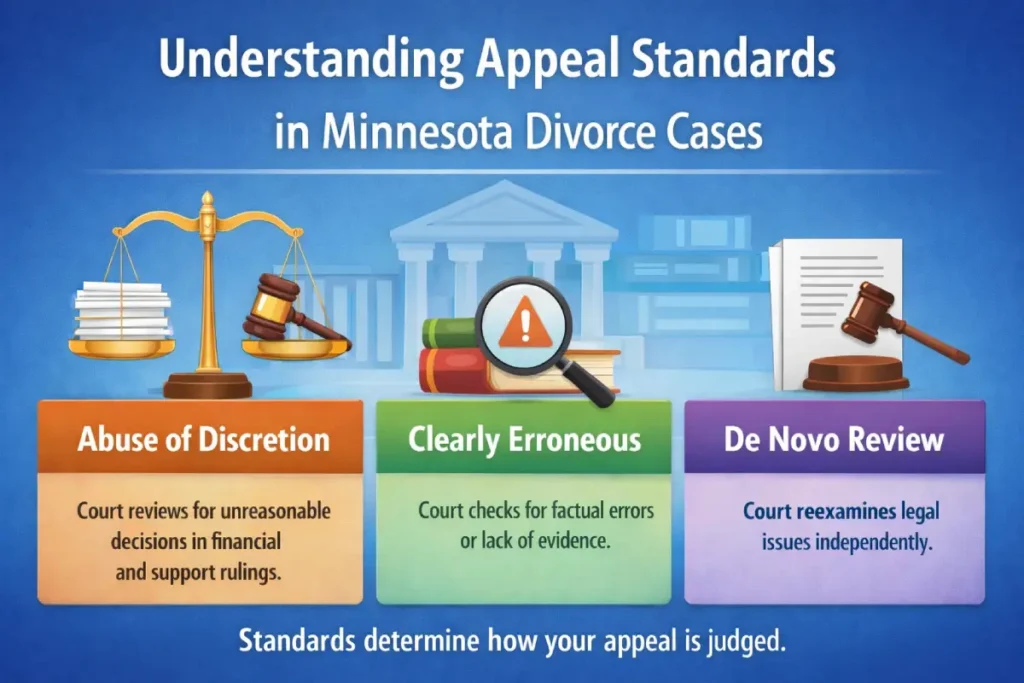
Appeal courts apply specific legal standards to determine whether your case should be modified. These standards define how strictly the original decision is reviewed and what your appeal must prove to succeed. In your case, the type of issue being challenged will determine which standard the court applies and how closely the original ruling is examined.
- Abuse of discretion – This is the most common standard used in financial and maintenance rulings. Courts assess whether the trial judge made a reasonable decision based on the evidence. If your case shows the decision was within a reasonable range, it is likely to be upheld.
- Clearly erroneous standard – This applies to factual findings. The court reviews whether the facts relied upon were supported by the record. If there is clear inconsistency or lack of evidence, your case may have stronger grounds for appeal.
- De novo review – This is used for legal questions. The appellate court independently reviews the legal issue without deferring to the trial court’s decision.
Each standard affects how your case is evaluated, and understanding these differences helps you assess whether your appeal is likely to meet the required threshold. Under Minnesota Rule of Civil Appellate Procedure 128.02, appellate courts require that the applicable standard of review be clearly addressed in each issue presented.
When Financial Errors May Affect Appeal Outcomes
Financial errors can influence whether your appeal succeeds if they affect the fairness of the original decision. In your case, the appellate court looks at whether these errors had a meaningful impact on the outcome rather than focusing on minor inconsistencies.
Courts may consider issues such as incorrect income calculations, misclassification of marital and non-marital property, failure to evaluate required statutory factors, or reliance on unsupported financial assumptions. These types of errors can raise concerns about how the decision was reached and whether proper legal standards were followed.
If such issues are clearly documented in the record, they may justify reversal or modification of the ruling. If you need guidance, you can Contact Us to understand how these factors apply. However, minor disagreements usually do not meet the threshold for a successful appeal.
How Maintenance Appeals Differ From Property Appeals
Maintenance appeals differ because they involve ongoing financial obligations rather than fixed asset division. In your case, courts often examine future financial impact and whether the award reflects long-term needs.
While property division focuses on fairness at the time of divorce, maintenance appeals consider income changes, earning capacity, and duration of support. Because these factors involve projections, courts often give trial judges wider discretion. This makes maintenance appeals more dependent on whether proper evaluation methods were used.
What You Should Evaluate Before Filing Appeal
Before filing an appeal, you should evaluate whether your case meets the legal standards required for review. Not every unfavorable decision qualifies for appeal.
You may consider:
- Whether a legal or procedural error occurred
- Whether financial findings lack supporting evidence
- Whether required factors were ignored
- Whether the outcome was influenced by incorrect reasoning
If you are unsure which records matter most in your case, it can help to talk with a divorce lawyer who can review your timeline and help you plan next steps with clarity.
What Appeal Standards Mean For Your Case
Understanding how appeal divorce ruling Minnesota standards apply can help you evaluate whether your case has a valid basis for review. Appeals focus on legal accuracy, not personal disagreement, which means your argument must show how the original decision failed to follow proper legal standards.
Financial and maintenance rulings are often upheld when courts find that the trial judge acted within their discretion and relied on appropriate evidence. However, when clear errors affect how your financial situation was evaluated, an appeal may provide an opportunity for correction.
Minnesota Divorce Attorneys help individuals understand how courts approach appeals and how these standards apply to their specific situation. For guidance about your case, call (612) 979-1305 or book a case evaluation on our Contact Us page.
Frequently Asked Questions
Can you appeal a divorce financial ruling in Minnesota?
Yes, you can appeal financial rulings if your case shows that the trial court made a legal or procedural error. Courts reviewing appeal divorce ruling Minnesota cases focus on whether proper standards were applied rather than reconsidering all evidence. Your appeal must clearly explain how the decision lacked support in the record or was incorrectly decided under Minnesota law.
How long do you have to file an appeal?
In Minnesota, you have a limited time to file an appeal after the final judgment is entered, and this deadline is strictly enforced. If you miss the filing window, your case may not be reviewed by the appellate court. You should carefully track court orders, judgment dates, and filing requirements to ensure your appeal is submitted correctly and within the required timeframe.
What makes a maintenance appeal successful?
A successful spousal maintenance appeal Minnesota case typically shows that the court misapplied legal standards or relied on incorrect financial information. This may include errors in income calculation, duration analysis, or failure to consider required statutory factors. Courts look for clear mistakes that affected the outcome, rather than disagreements with how the judge weighed evidence in your original case.
Can new evidence be introduced in an appeal?
Appeals generally do not allow new evidence to be introduced. Your case is reviewed based on the existing trial record, including documents, testimony, and the court’s findings. This means your appeal must focus on how the original decision was made and whether legal standards were applied correctly, rather than presenting new financial details or updated circumstances after the judgment.
Should you consult a lawyer before appealing?
Before filing an appeal, reviewing your case with a lawyer can help you understand whether legal standards support your position. Appeals involve technical legal arguments, strict deadlines, and procedural rules that may affect your outcome. If you are unsure which records matter most in your case, speaking with a divorce lawyer can help you evaluate your options and plan your next steps more clearly.