


Are you fearful about a theft case based on surveillance footage and store reports in Minnesota? You may assume that once a store shows evidence, the case is already lost. The truth is that store evidence is not always reliable, and Minnesota courts look much deeper than a single video clip or employee statement.
At Martine Law, we regularly help people who are facing theft accusations based on footage or reports that do not tell the whole story. You should have clarity and a defense strategy that protects your record and your future. This blog explains how surveillance videos and store reports are used in Minnesota theft cases and how a Minnesota theft defense lawyer can challenge them.
If you want to fight the theft charges, get in touch with us anytime.
Minnesota law on theft charges
The law includes a wide range of situations, including shoplifting, switching price tags, employee theft, and taking property without permission.
In simple terms:
- The state must prove that you intended to take or use property without paying for it.
- Surveillance videos and store reports are only pieces of evidence, not the entire case.
- The value of the alleged loss determines whether charges are misdemeanor, gross misdemeanor, or felony.
For example, a video showing you holding an item is not proof that you intended to steal it.
Minnesota Theft Case Trends and Why Evidence Matters
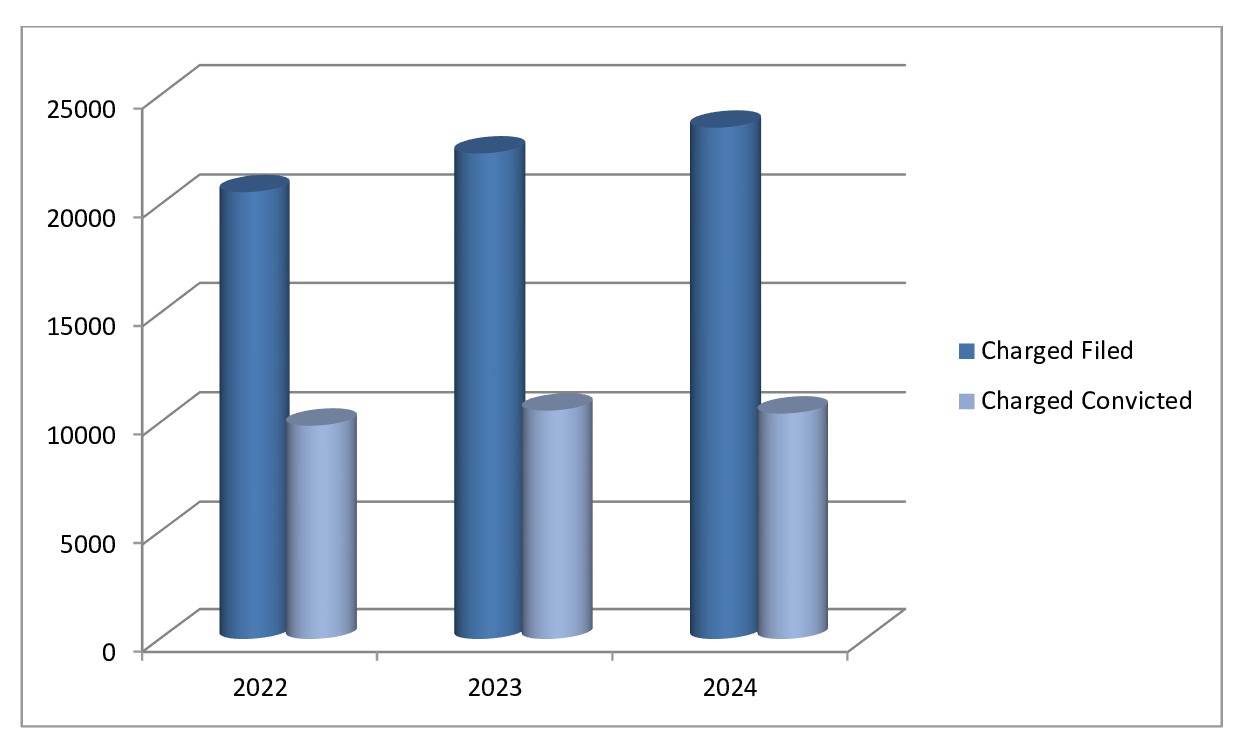
To understand why surveillance footage and store reports matter so much, the chart below shows the number of theft cases filed and the number that resulted in convictions over the past three years. The data highlights how evidence can influence the outcome of a case.
Reference: https://mncourts.gov/
Over the past three years, Minnesota has seen a steady rise in theft cases. In 2022, prosecutors filed 20,587 theft charges, with 9,870 resulting in convictions. That number increased to 22,358 charges and 10,558 convictions in 2023, and by 2024, filings reached 23,535 cases, with 10,425 convictions.
Common situations involving store evidence
Many theft accusations start with misunderstandings or assumptions rather than clear proof. We see situations like:
- Someone put an item in a bag while reorganizing a cart.
- A parent helping a child to carry something, which looks suspicious on camera.
- Poor-quality footage that makes it hard to see what happened.
- An employee filling out a report after only seeing part of the incident.
- Camera angles that miss essential moments.
- A store loss-prevention officer assumes intent without understanding the context.
These cases often come down to interpretation, not certainty.
Steps to take when a store claims it has a video or written report
These steps help protect your case and prevent misunderstandings:
1. Do not discuss the incident with store employees
Anything you say can show up in their report.
2. Do not sign paperwork or statements
Stores sometimes ask people to sign “admissions.” Do not sign without a lawyer.
3. Keep your receipts and payment records
Bank statements, mobile payments, and receipts help show what you purchased.
4. Write down your version of events
Details are easier to remember early on.
5. Save any relevant messages or photos
This includes shopping lists, messages about items you were buying, or anything showing intent.
6. Contact a shoplifting and property crimes attorney in Minnesota
A Minnesota theft defense lawyer can request footage, review reports, and challenge the store’s interpretation.
If you are unsure about what to do next, you can reach out, and we will walk through your options together.
Evaluation of surveillance footage in Minnesota courts
Courts do not automatically trust store video footage. Judges and prosecutors look at:
- Video quality (blurry, dark, or obstructed footage is common)
- Camera angles (many do not show the whole sequence of events)
- What happens before and after the clip
- Whether the footage clearly shows intent
- Employee testimony about how the footage was handled
- Whether the store followed proper evidence procedures
A video must show more than movement. It must show intent, and that is often where the store’s case falls apart.
Store incident reports and how courts review them
Incident reports are written by store employees, not law enforcement. Courts know these reports can include:
- Assumptions
- Mistaken observations
- Missing details
- Bias from loss-prevention staff
- Inaccurate descriptions of behavior
Prosecutors may use these reports, but they still must verify the claims. Your lawyer can challenge:
- Inconsistencies in the report
- Employee training and experience
- Missing witnesses
- Gaps in the timeline
- Differences between the report and the video
A strong defense often shows that the report leaves out important context.
Avoid mistakes after being accused of theft
These mistakes can unintentionally harm your defense:
- Trying to explain yourself to store staff or police
- Signing a store report or trespass notice with admissions
- Returning to the store to “fix things”
- Posting about the situation online
- Throwing away receipts or bank statements
- Not calling a lawyer early
Staying quiet and taking controlled, careful steps helps your lawyer protect your rights.
Present the facts with Martine Law’s help
A theft accusation can affect your job, your record, and your future. At Martine Law, we understand how these cases work and how often store evidence is incomplete. Here is how we defend you:
- We request the full video, not just the short clip the store selected.
- We review the footage for gaps, angles, and missing context.
- We challenge store reports that rely on assumptions or unclear observations.
- We gather witness statements and supporting records.
- We question the store’s evidence-handling procedures.
- We negotiate with prosecutors and push for dismissal when the evidence is weak.
- We prepare for trial if needed to protect your record.
- Our team of lawyers is available 24/7 to answer questions and help you stay informed.
You deserve a defense that tells the whole story, not just the store’s version.
Key takeaways
- Surveillance footage is not always clear and must show intent, not just movement.
- Store reports often include assumptions or missing details.
- Never sign statements or talk about the accusation without legal advice.
- Save receipts, write down what happened, and avoid online posts.
- A lawyer can challenge the store’s interpretation and protect your record.
If you need a Minnesota theft defense lawyer to help you challenge store video and reports, contact us or call (612) 979-1305 for a confidential consultation.