


Reviewed by the Marketing Team Last updated
Facing a felony charge in Minnesota can leave you with many questions about what may happen next. You might be trying to understand how sentencing works, what factors courts consider, or what the Minnesota Sentencing Guidelines mean for your situation. It’s completely normal to want clarity before moving forward.
Minnesota law uses a structured sentencing system for felony cases. The Minnesota Sentencing Guidelines Commission creates rules that help courts decide recommended penalties based on the severity of the offense and a person’s criminal history score. While judges often follow these guidelines, they also have some discretion depending on the case.
Contact us today for a better understanding of the guidelines.
Understanding Minnesota Sentencing Guidelines: What They Really Mean
Minnesota sentencing guidelines are meant to create fairness and consistency. They provide a framework that helps ensure cases with similar circumstances are treated similarly across the state.
Here’s what these guidelines typically consider:
- Type and severity of the felony
- Harm caused or potential risk
- Your criminal history score
- Aggravating or mitigating circumstances
These guidelines work as a roadmap for judges. They’re not the sentence itself, but they show what the law generally recommends.
How the Sentencing Grid Works: A Simple Explanation
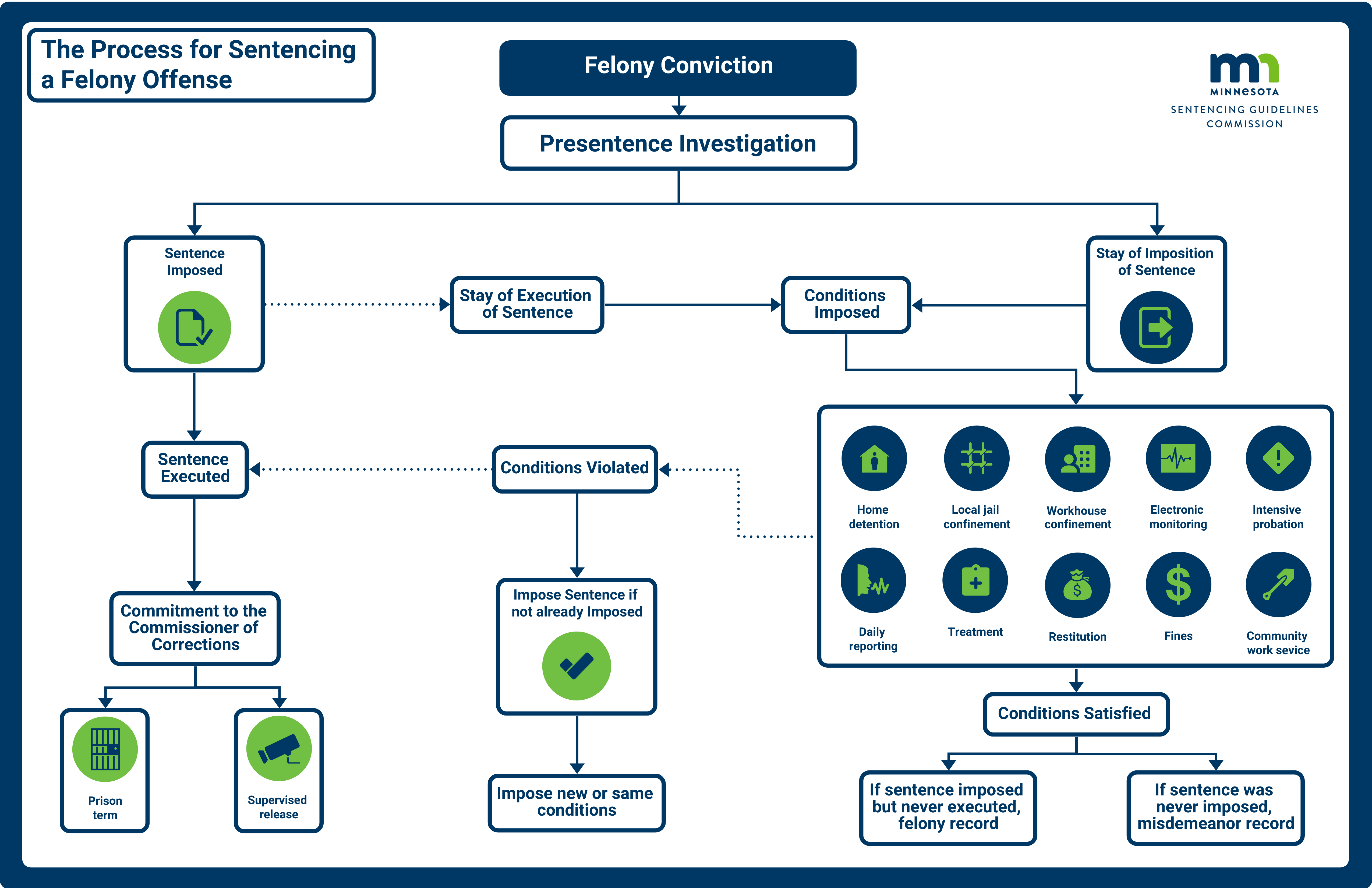
The sentencing grid in Minnesota provides a recommended range of sentences for felony cases. It uses two main factors: the severity level of the offense and the individual’s criminal history score. By combining these, the grid helps courts determine whether a sentence should include probation, incarceration, or imprisonment, while still allowing judges to consider the unique circumstances of each case.
Two Main Factors the Grid Looks At
The grid is built around two principal axes, which intersect to suggest a recommended sentence:
- Offense Severity Level
- Every felony is assigned a level, usually from 1 to 10.
- Higher numbers mean the offense is considered more serious under Minnesota law.
- Example: A violent crime or large-scale theft may be a level 8 or 9, while a lower-level drug felony may be a level 3 or 4.
- Criminal History Score
- This score counts your prior convictions.
- A first-time offender has a score of 0, while repeated convictions increase your score.
- Example: An individual with no prior offenses may receive a probation recommendation, whereas multiple prior convictions may result in imprisonment.
Where these two points meet, the grid indicates a presumptive sentencing range that guides the judge in deciding between probation, jail, or prison.
You can also check our blog on criminal history scores in Minnesota.
Understanding Presumptive, Stayed, and Executed Sentences
The sentencing grid uses terms that can be confusing. Here’s what they mean in everyday language:
- Presumptive Sentence – The standard recommendation based on your offense level and history score. Think of it as “what usually happens.”
- Stayed Sentence – Sometimes, a judge may “stay” the prison sentence, meaning you could serve probation instead if you meet certain conditions. Often applies to first-time offenders or cases with strong mitigating factors.
- Executed Sentence – The actual sentence you serve, which could include prison, jail, or other penalties if probation isn’t granted.
This framework helps judges remain consistent while still leaving room for case-specific decisions.
A Realistic Example
Imagine this scenario:
- You are charged with a felony property crime.
- You have no prior convictions.
- The offense severity is level 5, and your criminal history score is 0.
The grid may indicate a probation sentence or minimal imprisonment.
Now, the same offense, but with three prior convictions:
- Your criminal history score is higher.
- The grid may now suggest prison time, even though the crime itself hasn’t changed.
See how your past can influence the recommended sentence? That’s why having an attorney to explain the grid and advocate for you is so important.
Why Understanding the Grid Matters
Knowing how the grid works can give you clarity and perspective:
- It shows what judges typically consider in similar cases.
- It helps you see where your case might fall on the spectrum.
- It prepares you to discuss mitigating factors, like rehabilitation, community support, or other evidence that may influence the sentence.
While the grid is a helpful tool, remember the judge still has discretion. Your circumstances, actions, and legal representation all play a role in the final decision.
Factors That Can Affect Your Sentence
While the guidelines set a standard, judges may also consider additional circumstances:
- Early acceptance of responsibility
- The presence of injury or harm
- Whether a vulnerable person was involved
- Patterns of repeated behavior
Judges also weigh mitigating factors, like your efforts toward rehabilitation, lack of intent, or strong community support.
So, the guidelines are essential, but they’re only part of the bigger picture.
Get in touch today with our Felony defense lawyer to understand more about the factors that can affect your sentence.
When Sentences Might Differ From the Guidelines
Judges in Minnesota can depart from the guidelines under certain conditions.
Types of Departures
- Downward departure: A shorter sentence or probation
- Upward departure: A longer sentence or mandatory prison time
These departures usually require clear justification documented in the court record.
Example:
An individual with a felony conviction but strong evidence of rehabilitation may receive a reduced sentence. Conversely, repeat offenses or serious harm could justify a higher sentence.
If you want guidance on what options might be available in your case, our Minnesota Felony Lawyer can help you understand potential paths.
Your Rights During the Sentencing Process
Knowing your rights can make the process less daunting. You may have the right to:
- Review the allegations and evidence
- Present statements and supporting documents
- Challenge errors in the sentencing worksheet
- Request alternative sentencing options when appropriate
Court hearings can move quickly, and having a lawyer by your side may help make sure your rights are fully recognized.
What Happens After Your Felony Sentence
Once a sentence is issued, several outcomes may follow:
- Probation or supervised release
- Court-ordered treatment or rehabilitation programs
- Prison time for certain felony levels
- Restitution or other financial obligations
- Potential long-term effects on housing and employment
Some people may later qualify for expungement, depending on the offense and completion of requirements. These rules are outlined in Minnesota Statutes Chapter 609.
Key Takeaways
- Minnesota uses structured sentencing guidelines to promote fairness.
- Sentences are based on offense severity and criminal history scores.
- Judges may follow the guidelines or depart from them when the law permits.
- Each case is different, influenced by circumstances, history, and advocacy.
- Legal support can clarify your options and protect your rights.
Understanding sentencing guidelines can help you feel more prepared and in control as you move forward.
If you want to understand your situation, your options, and what the process might look like, Martine Law is here to provide clear, supportive guidance.
Schedule a call today or call at (612) 979-1305. Phones and chat are answered 24/7, with AI covering when no staff is free.