


If you’ve been charged with a crime in Minnesota, you may hear about the criminal history point system.
This system is a critical part of how judges decide sentences, especially for felonies. Understanding how it works can help you know what to expect and why your past record matters so much.
What is the Minnesota criminal history point system?
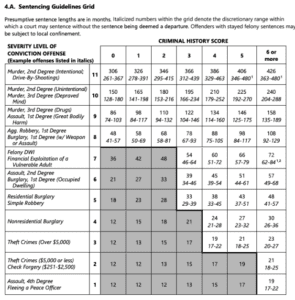
Minnesota uses a Sentencing Guidelines Grid, developed by the Minnesota Sentencing Guidelines Commission, to determine felony sentences.
The grid combines:
- Severity of the current offense (each felony has a severity level, from 1 to 11), and
- Your criminal history score (points assigned based on your past record).
The higher your score, the harsher the presumptive sentence.
See the Minnesota Sentencing Guidelines Grid (mn.gov)
How criminal history points are calculated
The Minnesota Sentencing Guidelines assign points in several categories:
- Prior felony convictions
- Each prior felony adds points based on severity level.
- More serious prior felonies add more points.
- Out-of-state convictions can also count if they match a Minnesota offense.
- Custody status at the time of the offense
- If you committed the new offense while on probation, parole, supervised release, or in custody, you may get 1 additional point.
- Misdemeanor and gross misdemeanor convictions
- Certain misdemeanors and gross misdemeanors (like DWI, assault, or theft) count toward your score.
- Typically, every 4 qualifying misdemeanors = 1 point (maximum 1 point from this category).
- Juvenile adjudications
- Certain juvenile offenses committed at age 14–17 may count, depending on severity.
- These can add up to 1 point total.
- Prior custody for sex offenses
- Special rules apply for prior sex crime convictions, which can add additional weight.
Why your score matters
Your criminal history score is placed on the sentencing grid along with the severity level of your current offense.
- Example: A person charged with a severity level 5 felony with 0 points may face probation or a stayed sentence.
- The same offense with 3 or more points could result in a presumptive prison term.
In other words, the more points you have, the fewer chances for leniency.
Can judges depart from the guidelines?
Yes, judges can order a sentence that is different from the guidelines in certain situations:
- Downward departure: A shorter or non-prison sentence than the guidelines suggest (rare, usually requires strong mitigating circumstances).
- Upward departure: A harsher sentence than the grid recommends (when aggravating factors exist, such as cruelty, multiple victims, or particular vulnerability of the victim).
But the sentencing guidelines are presumed to be followed, so departures require justification.
How this affects your case
- Even one prior felony can significantly increase your score.
- Repeat offenses (such as multiple DWIs, assaults, or thefts) can quickly build points.
- Points don’t automatically disappear after a certain time, though older offenses may carry less weight in some cases.
Key takeaways
- Minnesota uses a criminal history point system to calculate presumptive felony sentences.
- Points come from prior felonies, misdemeanors, custody status, juvenile records, and certain sex crimes.
- The more points you have, the harsher your expected sentence.
- Judges can sometimes depart from the guidelines, but that’s not guaranteed.
- An experienced Minnesota criminal defense lawyer can challenge how points are calculated, protect your rights, and argue for leniency.
At Martine Law, we help clients navigate the complex sentencing system in Minnesota. We understand how criminal history points are calculated and how to fight for the best possible outcome.
If you’re facing criminal charges in Minnesota, contact Martine Law today for a confidential consultation: Martine Law Contact