


You may be able to reduce assault charges Minnesota prosecutors filed, but that usually depends on the charge level, the provable facts, your record, and whether a negotiated plea fits Minnesota’s plea rules. A reduction is not automatic, and any agreement still has to move through the formal plea process in court.
An assault charge can sometimes be reduced through negotiations when the evidence supports a lower offense, a different offense, or a sentencing outcome that better matches the provable conduct. In Minnesota, plea discussions happen through defense counsel, and the court ultimately decides whether to accept the plea on the agreed terms.
That matters because assault cases can range from misdemeanor fifth-degree assault to felony assault charges carrying much greater exposure. The level of injury, whether a weapon is alleged, and how the case fits within Minnesota sentencing rules can all affect negotiation strategy and risk.
Martine Law can assist people who need a clear view of how assault negotiations, plea terms, and court approval may affect the next decision in their case.
When Assault Charge Reductions Become Legally Possible
A reduction becomes legally possible when the facts, the evidence, or the charging level leave room for a lower or different offense. In Minnesota, Rule 15 specifically allows a plea to a lesser included offense or an offense of lesser degree, and it also allows a plea to a different offense with the consent of both sides.
That does not mean every assault case qualifies. A prosecutor may still hold the original charge if the injury evidence, witness statements, or weapon allegations support it. But when the proof is weaker than the filed charge suggests, negotiations may focus on whether a lesser assault level or a different charge better reflects what the state can actually prove in an aggravated assault case. Minnesota law also requires county attorneys to maintain written charging and plea negotiation guidelines, which means these decisions are structured rather than random.
What Prosecutors Usually Evaluate During Negotiations
Prosecutors usually evaluate whether the filed assault count matches the evidence they expect to present in court. They also look at whether a negotiated outcome still addresses the conduct, the alleged harm, and the public-interest concerns reflected in charging policies.
Common negotiation factors may include:
- The level of bodily harm the state can prove.
- Whether a dangerous weapon allegation is supported.
- Your prior convictions or related history.
- The strength and consistency of witness accounts.
- Whether medical records, photos, or video support the charge.
- The sentencing exposure is associated with the current offense level.
- Whether the plea would still align with county charging and negotiation policies.
If you want case-specific guidance on how those factors may affect negotiations, you may contact us at (612) 979 – 1305.
How Assault Degree Changes Affect Case Exposure
A change in assault degree can change both your maximum statutory exposure and, in felony cases, the sentencing-guidelines position that shapes negotiation leverage. That is one reason the charge level matters so much during a plea negotiation in an assault case in Minnesota.
The table below shows why a proposed reduction can matter before you decide whether to negotiate.
| Assault Level | Core Allegation | Maximum Penalty Under Statute | Guideline Signal |
| Fifth-degree assault | Fear of immediate bodily harm or intentional bodily harm/attempt | Misdemeanor; enhanced forms can rise higher in specific repeat situations | Usually not a standard felony guidelines issue for the base misdemeanor form |
| Third-degree assault | Assault causing substantial bodily harm | Up to 5 years and $10,000 | Severity level 4 |
| Second-degree assault | Assault with a dangerous weapon | Up to 7 years and $14,000 | Severity level 6 |
| First-degree assault | Assault causing great bodily harm | Up to 20 years and $30,000 | Severity level 9 |
When you compare these levels, you can see why negotiations often focus on the injury level, the weapon allegation, and whether the state can support the highest filed count at trial.
Know More – What Happens If Both of Us Are Charged With Assault in Minnesota?
When Early Defense Work Matters Most
Early defense work matters most before positions harden around the filed charge and before plea terms are finalized on the record, especially in the early process. Minnesota plea rules place counsel at the center of plea discussions, so early legal review can shape what is raised with the prosecutor and how the case is framed for negotiation.
In practice, that early work may involve reviewing the complaint, identifying weaknesses in the injury evidence, analyzing whether the facts fit a lesser degree, and calculating the sentencing effect of each possible plea option. In felony matters, the presumptive sentence is determined under the Minnesota Sentencing Guidelines, so a change in offense level can affect more than just the label of the conviction.
Decision Factors In Minnesota Assault Negotiations
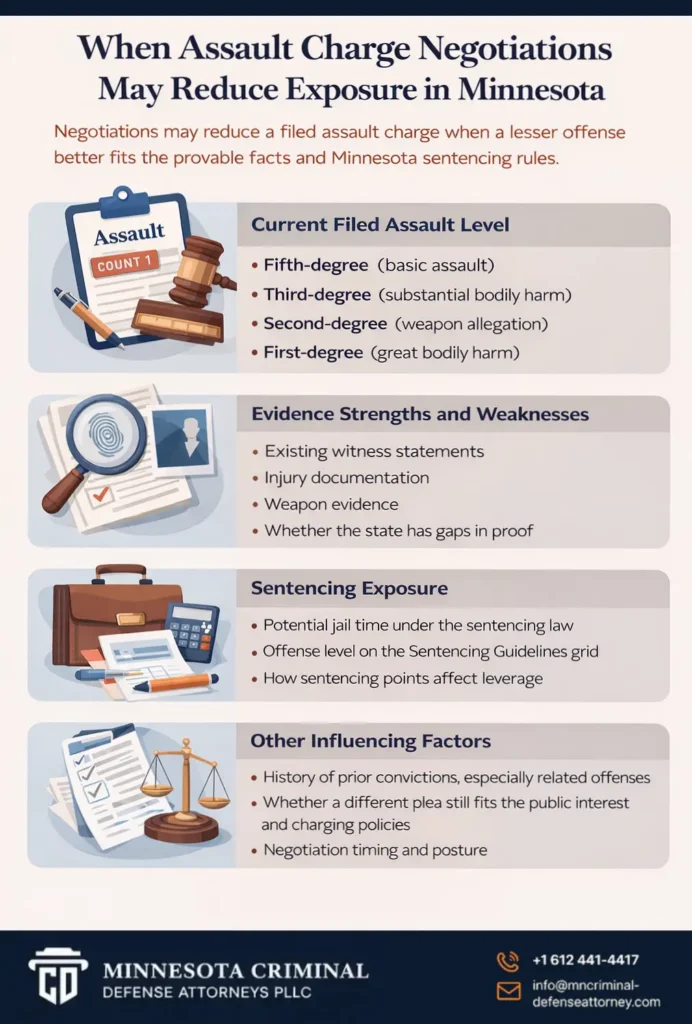
Charge negotiations in Minnesota usually depend on more than the name of the offense alone. Prosecutors and defense counsel often look at the filed assault level, the available evidence, the likely sentencing exposure, and other case-specific factors before deciding whether a lower or different plea may be appropriate. This infographic gives a quick visual breakdown of the main issues that can affect whether negotiations may reduce exposure in an assault case.
Source: Rule 15. Guilty Plea Procedures
As the infographic shows, a possible reduction usually depends on how well the filed charge matches the provable facts and how the case fits within Minnesota’s plea and sentencing rules. That is why it helps to look closely at the evidence, the current charge level, and the practical consequences of any proposed plea before deciding how to move forward.
What You Should Review Before Negotiating
You should review the offer against the original charge, the provable facts, and the practical consequences of accepting a plea, especially if negotiations could shift the case toward simple assault. A lower charge can still carry collateral effects, and a rejected plea can place you back in the position of facing the original count.
Before deciding, it often helps to confirm:
- Which offense would you plead to?
- Whether the plea is to a lesser offense or a different offense.
- Whether the original charge would be dismissed.
- What sentence or recommendation is attached to the agreement?
- Whether the court could reject the agreement.
- How the plea may affect your record and future case exposure.
A careful review helps you compare immediate certainty against the long-term effect of the conviction you would actually be entering.
How Charge Negotiations Can Shape Next Steps
Charge negotiations can change the path of an assault case, but the best option depends on what the state can prove and what the negotiated plea would actually require of you. In Minnesota, some assault charges may be reduced to a lesser degree or a different offense, yet that still depends on the prosecutor’s agreement in many situations, court approval, and the formal plea process on the record.
You should also weigh whether the negotiated offense accurately reflects the conduct alleged and whether the sentence terms match the practical risks in your case. Looking only at the reduced label is not enough if the plea still carries record, probation, or future charging consequences.
If you are deciding whether to accept an offer or continue challenging the filed charge, it helps to compare the original allegation, the available evidence, the sentencing exposure, and the long-term effect of the plea being proposed. Martine Law can help you assess whether efforts to reduce assault charges that Minnesota prosecutors filed are consistent with the facts and with your legal goals. For general case-intake guidance, you may call (612) 979 – 1305 or use Contact Us.
Frequently Asked Questions
Can a felony assault charge be negotiated down in Minnesota?
Yes. A felony assault charge can sometimes be negotiated to a lower-degree assault or a different offense, but that depends on the provable facts and the plea rules that apply. Minnesota Rule 15 allows pleas to lesser offenses and, with consent, to different offenses. The court still reviews the plea terms and may evaluate whether the agreement is appropriate for the record.
Does the judge decide the negotiation terms?
No. The judge does not negotiate the plea for the parties. Under Minnesota Rule 15, plea discussions are handled through counsel, and the district court judge must not participate in the bargaining itself. The judge instead reviews the proposed plea in court and decides whether to accept it, reject it, or delay acceptance pending further review.
Can a plea offer disappear if you wait too long?
Yes. A plea offer can change as the case develops because negotiations are tied to evidence, witness availability, and litigation strategy. Waiting may also delay a useful review of whether the facts support a lower offense. In some cases, it also helps to compare plea timing with what affects early charges.
Will a reduced assault charge still affect your record?
Yes. A reduced charge may still create a criminal conviction record, even if it lowers the offense level or changes the sentencing exposure. That is why the decision is not only about avoiding the highest field count. You should also consider the exact offense of conviction, any probation terms, and how the result may matter in future background checks or later cases.